Who Are We?
Overwatch is primarily an online team-oriented first-person shooter, and an example of a "hero shooter" where players select from one of several pre-designed hero characters with their own unique abilities. Overwatch includes casual play modes, competitive ranked play modes, and various arcade modes where special rules apply. Most game modes bring together two teams of six players each into a match and compete in one of several objective-based game types based on the randomly selected map, including taking control points and escorting a payload. A match starts with each player selecting from one of the available hero characters. The game's characters are divided into three role classifications: damage, tank, and support. Damage characters are often doing the most damage and help the team with the majority of kills. Tank characters can absorb large amounts of damage for the team, and support characters share healing abilities and similar status effects for the team or against enemies. The game will warn teams if they have an imbalance in their general role selection, and certain game modes require players to select different heroes. Players are able to switch between heroes mid-match after they are killed or if they return to their team's base. Each hero character has fundamentally different attributes such as health and movement speed, at least one basic attack, and at least one unique skill, collectively referred to as a skill kit. These skills can be used repeatedly after waiting out the skill's cooldown period. Each character also has at least one powerful ultimate ability that becomes available once its meter is charged, either slowly over time or through other actions such as killing opponents or healing teammates. Once the ultimate ability is used, the player has to wait for the meter to fill again. All characters have a close-combat, low damage melee attack that can be used at any time. Winning matches earns the player experience towards experience levels in the meta-game. The player earns a loot box on reaching a new experience level, which contain a random assortment of character skins, emotes, speech lines, and other cosmetic items for each character without specific game-changing effects. Players can also purchase loot boxes with real-world money. Blizzard has provided free post-release content for the game, such as new levels and characters. Blizzard has also introduced limited-time seasonal events, offering new cosmetic items in loot boxes, themed levels, and gameplay modes.
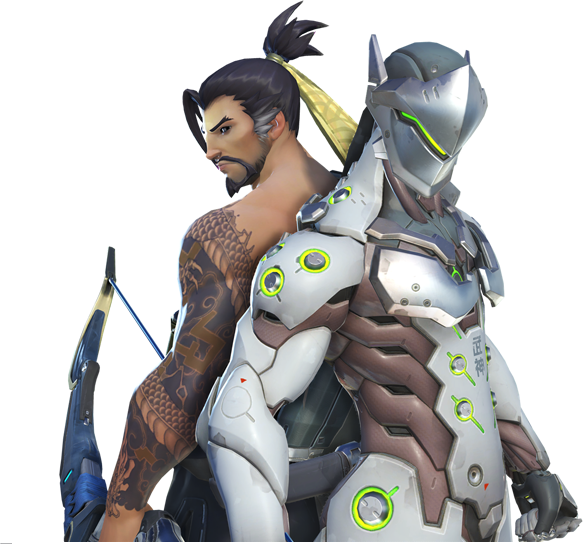
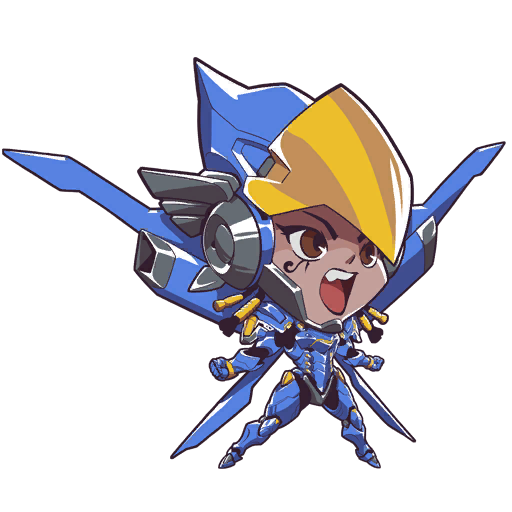
Overwatch originally featured 12 characters at its November 2014 BlizzCon convention announcement, but expanded to 21 by the next year's convention. The game is character-driven, and reviewers noted Overwatch's emphasis on the individual differences between characters in the same role (e.g., between two snipers) as a departure from dominant class-based shooter paradigms. Critics widely praised the game's accessible and detailed character design and its role in the game's overall success. Similar to Valve's initial launch of Team Fortress 2, in the absence of a dedicated story mode, Blizzard tells the backstory of Overwatch's plot and characters through media outside the game, including animated shorts, character press events, tweets, and webcomics. The game's story centers around a technological singularity in which humanity assembles a team of its best heroes, Overwatch, to fight off a rogue artificial intelligence and its robotic army of Omnics in an incident called the "Omnic Crisis". After winning its battle, the Overwatch kept the peace for about three decades before infighting led to its disbandment. The game takes place approximately sixty years in the future, during a time period in which the world is slipping into disarray, and former Overwatch members along with new allies, as well as enemies, are being called on to help protect the peace in their respective favors. Among Overwatch's enemies include Talon, a global criminal network seeking wealth and power. In early 2016, Blizzard released media kits with granular character detail for fan artists and cosplayers. Preceding the game's launch, PornHub reported a surge in searches for pornography including Overwatch characters. An intellectual property security firm issued multiple takedown requests to sites featuring such videos and other erotica created in Source Filmmaker.
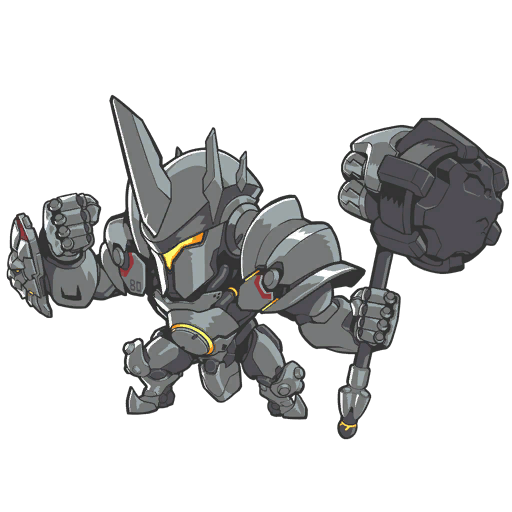
Overwatch was developed by Blizzard following the cancellation of a massively multiplayer online role-playing game Titan, a project that had been in works for several years. A smaller team from those on Titan were given the role to come up with a new project, and they came onto the idea of a first-person shooter that emphasized teamwork, inspired by Team Fortress 2 and the rising popularity of multiplayer online battle arenas, as well as their own development team unity they found to keep their morale high following Titan's cancellation. The development team settled on a narrative of a near-future Earth setting following a global-scale catastrophic event - the Omnic Crisis in which robots, known as Omnics, rose up in rebellion against humanity until stopped by a peacekeeping group known as Overwatch. With selection of this global theme, the developers wanted to create a cast of playable characters to portray diverse representations of genders, ages, ethnicities, and nationalities. The heroes include human, transhuman, and non-human characters such as cyborgs, robots, and a gorilla. The need for a diverse cast was important to the developers, as some of Blizzard's previous games had been criticized before for missing this mark; Metzen explained that even his daughter had asked him why all the female characters from Warcraft seemed to be only wearing swimsuits. Metzen stated: "Specifically for Overwatch over the past year we've been really cognizant of that, trying not to oversexualize the female characters." Kaplan explained that the industry was "clearly in an age where gaming is for everybody", going on to say that "increasingly, people want to feel represented, from all walks of life, boys and girls, everybody. We feel indebted to do our best to honor that." In addition, Blizzard stated at the 2016 Blizzcon that some of the characters are LGBT, though did not specify which ones at that time. Blizzard has stated that "As with any aspect of our characters' backgrounds, their sexuality is just one part of what makes our heroes who they are." Since then, Tracer has been shown to be in a romantic relationship with another woman through one of the tie-in comics published online by Blizzard. In a subset lore story, Soldier:76 was also identified as gay, having had a romantic relationship with a man prior to joining Overwatch. The team envisioned the characters akin to superheroes in this narrative, each with their own abilities, background and personality that could stand on their own, but could also fit into the larger story; this notion translated into the characters being agents for the game, which Metzen said still captures the "heroism and vibe" that superhero stories carry. The team did not want to have any characters that served solely as villains in the game, but did develop some of the characters, like Soldier: 76, to have an unsure purpose within the narrative. Several characters were envisioned for the game during its pre-planning stages, but did not make the cut, or were later incorporated into other heroes. Among characters that were considered included a jetpack-wearing cat, a hockey player that used rocket-power skates, and a Russian woman that would ride a bear and for which her ultimate ability would have the bear rear up and wield his own set of AK-47 rifles. Initially, Reinhardt was an Omnic, but later was settled to be a human character, with the Omnic nature later revisited when the development team crafted Orisa. Characters introduced since the game's release are generally teased a few weeks in advance or given a cold surprise announcement. The only exception to this had been Sombra, who had been teased by a months-long alternate reality game (ARG) prior to her formal announcement. Blizzard found players reacted negatively to this deployment, and have opted to avoid this type of prolonged teasing for future characters. Blizzard will still seed upcoming hero characters into the game's announcement media but without making comments towards that, anticipating players would find these before the character is officially announced; for example, the 26th hero Moira had appeared in at least two works prior to her announcement. Once a character is announced, they are typically made available on the "Public Test Region" (PTR) for Windows players to try out and help provide feedback to Blizzard. Once Blizzard is satisfied with the PTR character, typically a period lasting two to three weeks, the character is then released to all players on all regions and platforms, outside of competitive play, as to give players a chance to learn the character. Roughly a week following this, the new character then becomes available for competitive play mode. Character powers are frequently tweaked and adjusted with patches, mostly incremental changes. A few characters have had major overhauls, notably Symmetra (with two separate overhauls of her skill), Mercy, and Torbjörn. Like new characters, these overhauls are tested in the PTR before released to all public regions. A major notable change, reducing the number of roles from four to three (combining "offense" and "defense" heroes into the "damage" category) was implemented in the PTR before being released for all players in June 2018. Overwatch 2 was announced in November 2019. While the sequel will add new player-versus-environment game modes, Blizzard wants to keep a shared online experience for multiplayer between the two games, so all heroes, maps, and player-versus-player game modes will be available in both Overwatch games, and allow matchmaking between players of the two games. With the introduction of Echo, the 32nd hero to Overwatch, in March 2020, Kaplan stated that the team's focus was now on Overwatch 2 and it was unlikely they would release any additional heroes prior to the game's release.